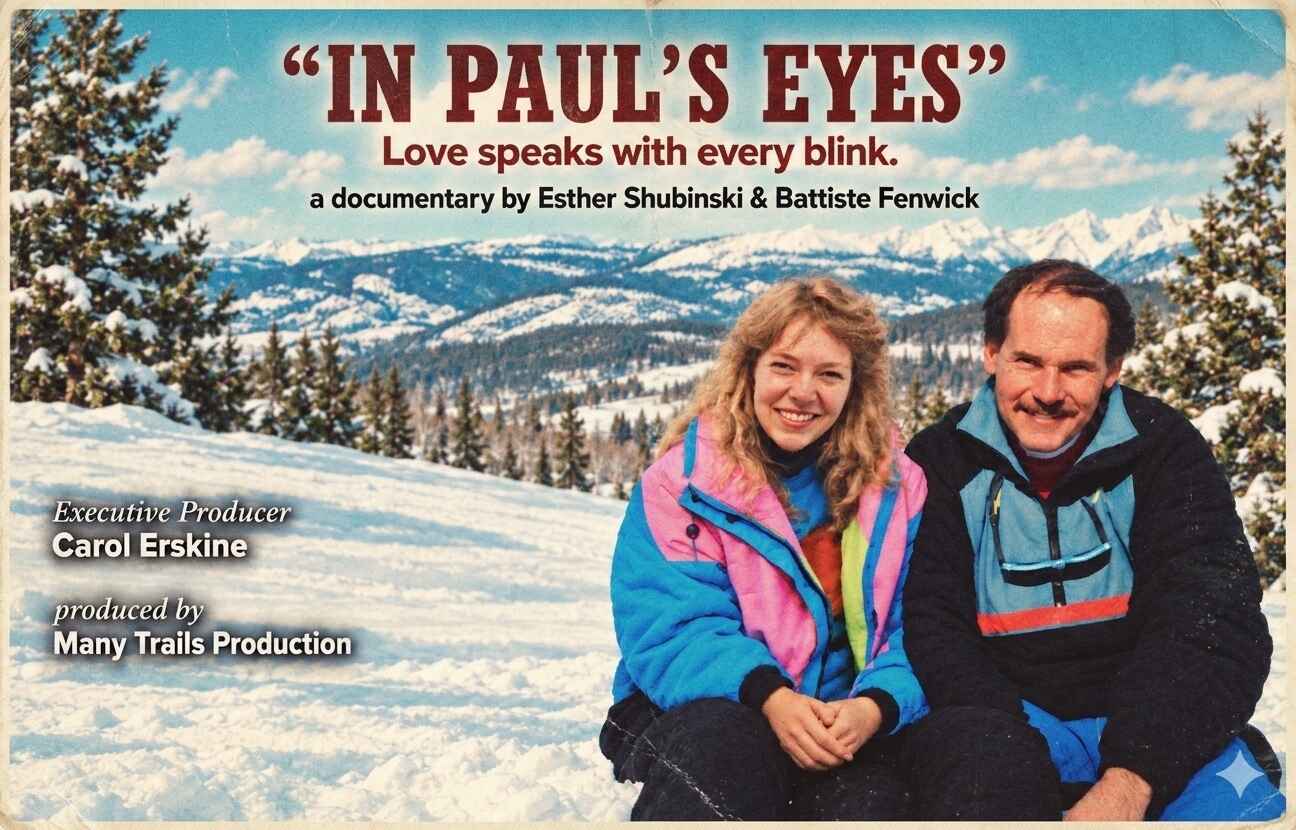
In Paul's Eyes
A film by Esther Shubinski & Batttiste Fenwick
About the project:
Paul Papacalos was set to marry Judy Bourgeois in 1993. They were building their dream house and hoped to have a baby. Then Paul suffered a massive stroke that left him locked inside his body, unable to speak or move.
Judy knew Paul was still there. Looking into his eyes, she just knew. She developed a system of blinking, eyebrow movements, and letters that allowed Paul to communicate. Soon they were having conversations again—but no longer about the life they had planned.
Paul had been an extraordinary athlete who skied Tuckerman Ravine, cycled, and climbed mountains. Unable to accept life permanently trapped inside an unresponsive body, he made the decision to refuse nutrition and hydration. His family, holding onto hope for recovery, opposed his wishes. Heartbroken but resolute, Judy stood by Paul's decision.
Paul petitioned the court to establish that he was competent to make that decision. Attorney Carol Erskine was appointed his guardian ad litem, and attorney Geoffrey Spofford represented Paul. But something unexpected happened as they prepared for the hearing: Paul became more than a case. Carol and Geoff developed a deep friendship with him and Judy, coming to know Paul's intelligence, humor, and extraordinary determination.
On November 7, 1993, Paul's hospital room became a courtroom. Dressed in civilian clothes at his insistence, Paul communicated through his eyes while Carol translated his signals into words for the judge. His request was unwavering: “No nutrition and hydration.”
Asked what would happen if he refused food and water, Paul answered:
D-E-A-T-H.
More than thirty years after Paul died, we return with Judy to Tuckerman Ravine and to the life she and Paul once imagined together. Judy never married. Paul was the love of her life.
Through intimate interviews, cinéma vérité and archival materials, In Paul's Eyes tells the story of Paul and Judy's extraordinary love, Paul's fight to be heard, and the friendships forged around an alphabet board that have endured for more than three decades. It explores love, loss, autonomy, and human dignity—and asks how one man's determination can continue to influence medicine, law, and the people whose lives he changed.