Blue Collar
A film by Kamala Parel-Nuttall
About the project:
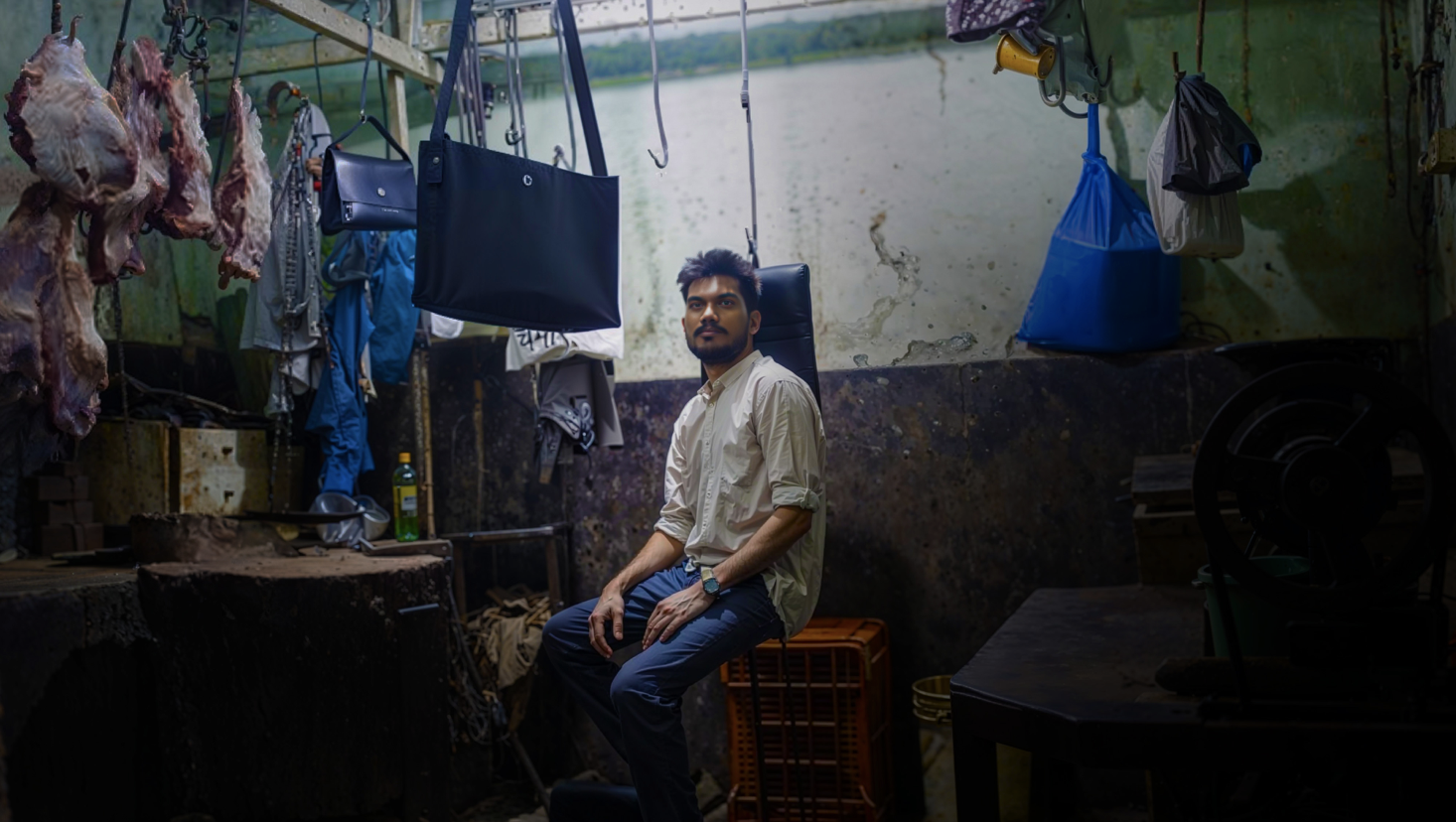
BLUE COLLAR is a feature documentary that follows Sudheer Rajbhar, a low-caste artist from the slums of Mumbai who makes sleek bags and shoes from waste rubber. Sudheer named his business, a collective of cobblers and leatherworkers, Chamar Studio, reclaiming’chamar’, a caste slur, as a symbol of luxury, skill, and craftsmanship. Chamar products sell in European markets and to India's elite, but Sudheer’s vision extends beyond commercial success. His bigger plan is a school where ‘untouchable’ artisans can experiment with upcycled materials and train as designers, not expendable labour for the global fashion market.
When Dior staged a fashion show at Mumbai's Gateway of India in 2023, turning a public monument into a temporary runway for haute couture, Sudheer saw possibility. If luxury brands can claim public space, why can’t he? Inspired, he began to plan a runway show of his own, byworkers for workers, calling it Blue Collar. At 3 am on a weekday morning in Mumbai’s grandest colonial station, shoe polish boys who work on the platform will stroll down it as a runway, wearing blue suits and sandals made from discarded inner tubes. No applauding crowds, no fanfare. Just workers in blue, the colour of Dalit pride. Livestreamed on social media.
For Sudheer this is not a stunt, and it’s more than a fashion show. It is a protest against caste and global fashion’s unstainable practices, and proof of concept for a school that will train ‘untouchables’ to become creators in the eco-fashion movement.
But nothing about Blue Collar is certain. If the event is leaked, there will be trouble. Given the chaos of Mumbai’s busiest station, anything could go wrong. Permissions will be sought but can’t be guaranteed. An angry mob could form in the blink of an eye, even at 3 am. The models are nervous about the risks of visibility; they may not even show up. As the date approaches, Sudheer grapples with his own hard questions. Is this solidarity or simply spectacle? Does he belong in the same space as Dior? And can fifteen minutes shift how the world sees caste, fashion, and labor, or will it simply expose the distance between his own success and the workers who are destined to remain exactly where caste has placed them?